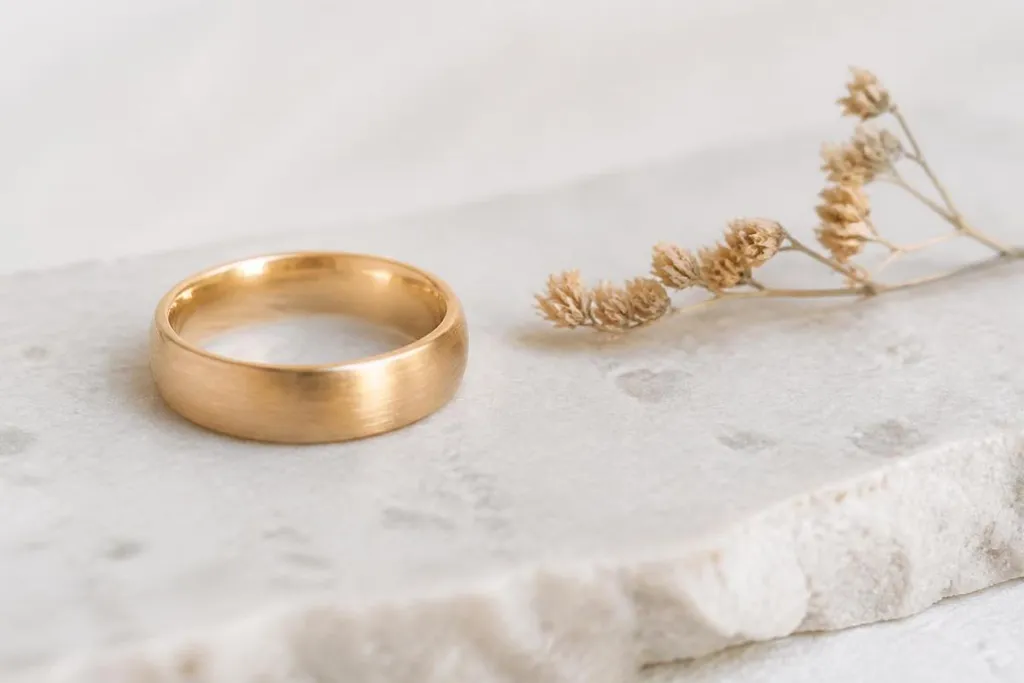
A plain wedding band may be one of the simplest pieces in a jewellery collection, but simplicity makes proportion more important, not less. Without diamonds or decorative settings to dominate the eye, the character of the ring comes from subtler decisions: how wide the band is, whether its surface is rounded or flat, how it feels between the fingers and the way its finish responds to daily wear.
For anyone exploring timeless womens plain wedding band designs, these details are worth considering carefully. A wedding ring is likely to be worn more consistently than almost any other piece of jewellery, often alongside an engagement ring. The ideal design therefore needs to look beautifully balanced while remaining comfortable enough to become an effortless part of everyday life.
Profile Changes Both Appearance and Comfort
The profile describes the shape of the band when viewed in cross-section, and relatively small differences can noticeably change how a wedding ring feels.
A traditional court-style band has a softly rounded exterior and a curved inner surface. Its smooth contours create a classic appearance and can feel particularly comfortable for continuous wear.
Flatter profiles provide a cleaner, more contemporary look. Their straighter surfaces can create stronger visual definition beside an engagement ring, especially when paired with geometric diamond shapes such as emerald, radiant or princess cuts.
There are also profiles that combine elements of both approaches, offering a flatter external surface with softened edges or a comfortable interior.
The best choice depends partly on personal preference and partly on the engagement ring. A very rounded wedding band beside a sharply structured engagement ring creates deliberate contrast, while similar profiles can make the two rings appear more unified.
Width Determines How Subtle or Substantial the Band Feels
A narrow wedding band creates a delicate line of precious metal and can be especially effective beside an engagement ring with a fine band. It allows the centre stone to remain visually dominant and adds relatively little overall width to the bridal set.
A broader band has greater presence. This can balance an engagement ring with a substantial centre stone or suit someone who prefers jewellery that feels more noticeable on the hand.
Finger proportions matter too. A very wide band can occupy significant space on shorter fingers, particularly once an engagement ring is added. Conversely, an extremely fine band may feel visually slight on a larger hand.
Width also affects how the ring feels between neighbouring fingers. For someone unaccustomed to wearing rings, a moderate or finer width may initially feel more natural.
Rather than selecting width according to a trend, it is worth viewing several options beside the actual engagement ring. Even a small difference can alter the proportions of the complete set.
Polished and Matte Finishes Create Different Characters
A highly polished wedding band reflects light clearly and gives plain precious metal a bright, formal appearance. It is a traditional choice precisely because the simplicity of the surface allows the quality and colour of the metal to remain prominent.
Matte, satin or brushed finishes reduce reflection and create a softer effect. These treatments can make a plain band feel distinctly contemporary without adding gemstones or decorative motifs.
The practical reality is that all wedding bands develop signs of wear. Fine scratches and surface marks are normal on jewellery worn daily, whether the original finish is polished or matte.
Different metals also age in different ways. Platinum develops a characteristic patina, while gold alloys acquire their own surface marks through regular use. Professional refinishing can restore a particular appearance if desired, although some wearers prefer allowing the ring to develop its natural character over time.
Match the Band to the Engagement Ring and Lifestyle
A plain wedding band may look uncomplicated on its own but still needs to work physically with the engagement ring.
A straight band can sit closely beside many engagement settings. Others have low galleries or projecting details that create a gap between the rings. In those cases, a shaped or contoured profile may provide a closer fit, although some wearers deliberately prefer visible separation.
Metal choice also affects the overall composition. Matching platinum with platinum or gold with the same gold colour creates visual continuity. Choosing contrasting metals can make each ring more distinct.
Daily habits should influence the final decision as well. Smooth surfaces and restrained profiles are particularly practical for frequent wear, but comfort should always be assessed on the individual hand.
Final Thought
Plain wedding bands demonstrate how much design can be achieved without gemstones or elaborate decoration. Profile, width, finish and precious metal provide enough variation to make a seemingly simple ring highly personal.
The strongest choice is one that feels comfortable alone, sits naturally beside the engagement ring and suits the wearer's established style. With those details resolved, a plain wedding band can achieve exactly what its name suggests: uncomplicated design with enduring relevance.