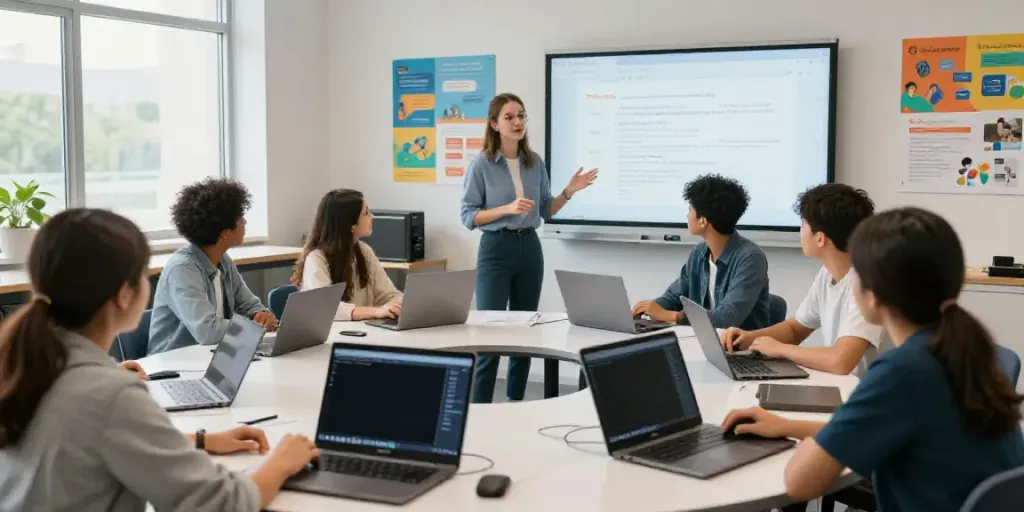
Understanding Generative AI in Education
As the education sector undergoes rapid transformation, the integration of technology has become a focus point for educators and institutions alike. One of the most promising advancements is generative AI, which has begun reshaping how educational content is developed and delivered. By leveraging AI capabilities, teachers can generate educational articles with AI that cater to varied learning styles and educational needs, ultimately enhancing the learning experience for students.
What is Generative AI?
Generative AI refers to a class of artificial intelligence that is capable of creating content, including text, images, and audio, based on input data. Unlike traditional AI, which often focuses on recognizing patterns or making predictions, generative AI can produce entirely new content that mimics human creativity. In the educational context, generative AI can assist in writing articles, creating lesson plans, and developing learning materials tailored for specific subjects or grade levels.
Benefits of Using AI in Educational Content Creation
- Time Efficiency: AI can significantly reduce the time teachers spend on content creation. Instead of spending hours crafting lessons, educators can use AI tools to generate resources in minutes.
- Personalization: Generative AI allows for content to be tailored to the individual needs of students, accommodating different learning paces and styles.
- Resource Accessibility: By creating a wide range of materials, AI can help educators access diverse resources that might otherwise be unavailable or difficult to obtain.
- Enhanced Engagement: Through interactive and dynamic content, AI can help maintain student interest and enhance the overall learning experience.
Top AI Tools for Generating Educational Articles
Several AI tools have emerged to assist educators in creating educational articles effectively. Among the most notable are:
- Magic School AI: Offers an academic content generator designed specifically for educators, enabling the creation of lesson plans, worksheets, and strategies tailored to various learning goals.
- Eduaide: Provides a suite of AI-driven tools that help generate instructional materials, including lesson plans and assessment rubrics.
- Nearpod: Known for its interactive lesson creation, Nearpod integrates AI to suggest personalized content based on students’ progress and engagement levels.
- OpenAI's GPT Models: These models can generate high-quality articles and educational content based on prompts provided by educators.
How to Generate Educational Articles with AI
Step-by-Step Process to Utilize AI
To successfully generate educational articles using AI, educators can follow a structured approach:
- Define Learning Objectives: Clearly outline what you want the article to achieve, including the specific subject matter and educational goals.
- Select an AI Tool: Choose an appropriate AI tool that fits your needs (e.g., Magic School AI or Eduaide).
- Input Data: Provide the AI with relevant input data, such as topic keywords, desired article length, and any specific requirements.
- Review and Edit: After the AI generates the article, review it for accuracy, relevance, and quality, making necessary edits to align it with educational standards.
- Publish and Share: Once finalized, the article can be shared with students or integrated into lesson plans.
Incorporating AI into Lesson Planning
Incorporating AI into lesson planning involves leveraging AI tools to create comprehensive lesson plans that include objectives, activities, and assessments. Educators can take advantage of AI's ability to suggest resources and methods that align with their teaching goals, ultimately enriching the learning environment. For instance, an AI tool can analyze a given topic and recommend engaging activities and assessments that promote student involvement and learning retention.
Best Practices for Article Creation with AI
- Be Specific: The more specific the input data, the better the AI can generate targeted content.
- Regularly Update Content: Ensure that articles remain current by periodically updating them with new information and insights.
- Seek Feedback: Encourage students or fellow educators to provide feedback on AI-generated articles, using their insights to refine future outputs.
- Integrate Multimedia: Enhance the content with images, videos, or interactive elements to make it more engaging.
Addressing Common Challenges in Using AI
Overcoming Misconceptions about AI in Education
Despite the numerous benefits of AI in education, several misconceptions persist. One common belief is that AI will replace teachers; however, this technology is intended to augment and support educators, not replace them. AI can handle repetitive tasks, allowing teachers to focus on more meaningful interactions with their students. Educators must communicate the role of AI as an assistant in the educational process rather than a substitute for human instruction.
Technical Issues and Solutions
Technical difficulties can occur when using AI tools, such as software glitches or accessibility issues. To mitigate these challenges, educators should ensure they have reliable technical support and training in using the tools effectively. Additionally, identifying user-friendly platforms can reduce barriers to adoption and improve user experiences.
Ensuring Quality and Accuracy in AI-Generated Content
A significant concern regarding AI-generated content is the potential for inaccuracies. To ensure quality, educators should always review and edit AI outputs carefully. Setting guidelines for content verification and incorporating human judgment in the review process can help maintain high standards and ensure that the materials meet educational criteria and objectives.
Real-World Applications of AI in Education
Case Studies of Successful AI Implementation
Several educational institutions have successfully integrated AI into their curriculum, showcasing its potential benefits:
- Case Study: XYZ High School implemented an AI tool that generates personalized learning resources for students based on their assessment results. This led to a notable increase in student engagement and comprehension.
- Case Study: ABC University used AI to create automated feedback systems for student essays, providing quicker responses and reducing instructor workload.
Feedback from Educators and Students
Educators and students alike have expressed positive feedback about the integration of AI in educational contexts. Teachers appreciate the time saved on administrative tasks, while students value the personalized learning experiences facilitated by AI-generated content. This synergy between technology and pedagogy demonstrates the potential for improved educational outcomes.
Measuring Success: Metrics and Outcomes
To evaluate the success of AI in educational initiatives, institutions can use metrics such as:
- Student engagement levels
- Improvement in academic performance
- Feedback from students and teachers on the usefulness of AI-generated materials
- Overall satisfaction rates with the learning experience
Future Trends in AI Educational Tools
Predictions for AI in Education by 2026
As technology continues to evolve, several trends are anticipated to shape the future landscape of AI in education:
- Increased Personalization: AI will become more sophisticated in delivering tailored learning paths based on individual student needs and learning styles.
- Integration with Virtual Reality: The combination of AI and VR technologies will provide immersive learning experiences, enhancing student engagement and understanding.
- Greater Accessibility: AI tools will be developed to support students with disabilities, ensuring inclusive education for all learners.
Emerging Technologies and Innovations
In addition to expected trends, emerging technologies such as machine learning algorithms and natural language processing will enhance the capabilities of AI tools in education. These advancements will enable more effective content creation and personalized learning experiences, thereby transforming the educational landscape further.
Preparing for a New Landscape in Teaching and Learning
As AI becomes an integral part of education, teachers will need to prepare for this new landscape by embracing these technologies, undergoing training, and adapting their teaching strategies. Continuous professional development will be essential to ensure educators can leverage AI effectively to enhance student learning.
What is the 30% rule for AI?
The "30% rule" for AI suggests that AI-generated content should always undergo at least 30% human editing to ensure accuracy, relevance, and quality. This approach helps guarantee that the final output meets educational standards while benefitting from the efficiency that AI provides.
Which AI is best for creating educational content?
Several AI tools are recognized for their effectiveness in creating educational content, including OpenAI's GPT models, Magic School AI, and Eduaide. Each tool offers unique features catering to diverse educational needs, making it crucial for educators to select the one that best fits their requirements.
Can teachers tell if you use ChatGPT?
While some educators may notice distinct writing patterns or styles associated with AI-generated text, advanced AI models like ChatGPT are designed to produce content that closely resembles human writing. However, teachers may still discern inconsistencies or lack of depth in AI-generated content.
Can you tell if an article was written by AI?
Identifying AI-written articles can be challenging, especially as generative AI improves. However, analyzing the coherence, depth, and originality of the content can provide clues. Inconsistent formatting, repetitive phrases, or overly uniform structure may indicate AI involvement.